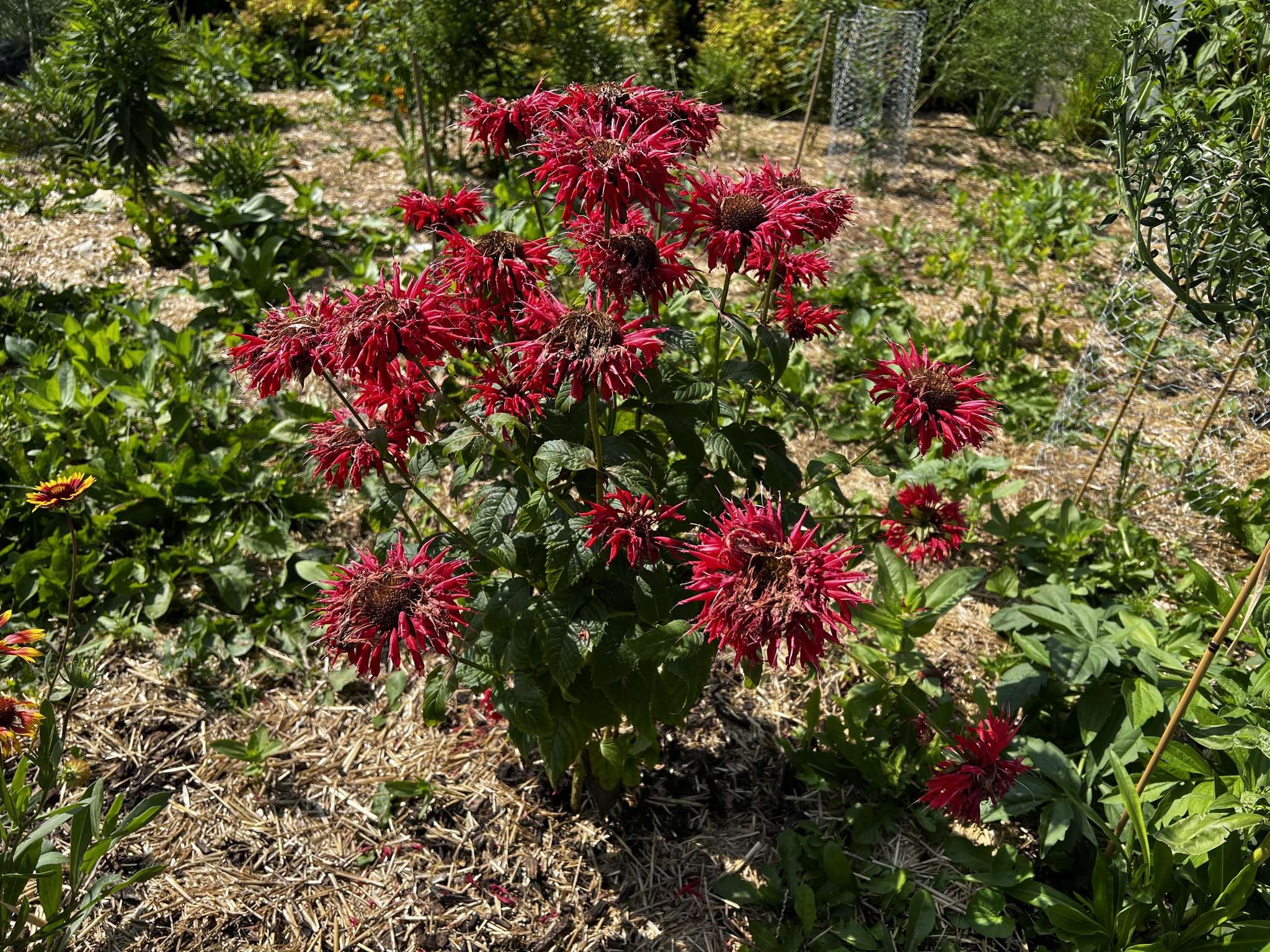
Front Yard Pollinator Habitat
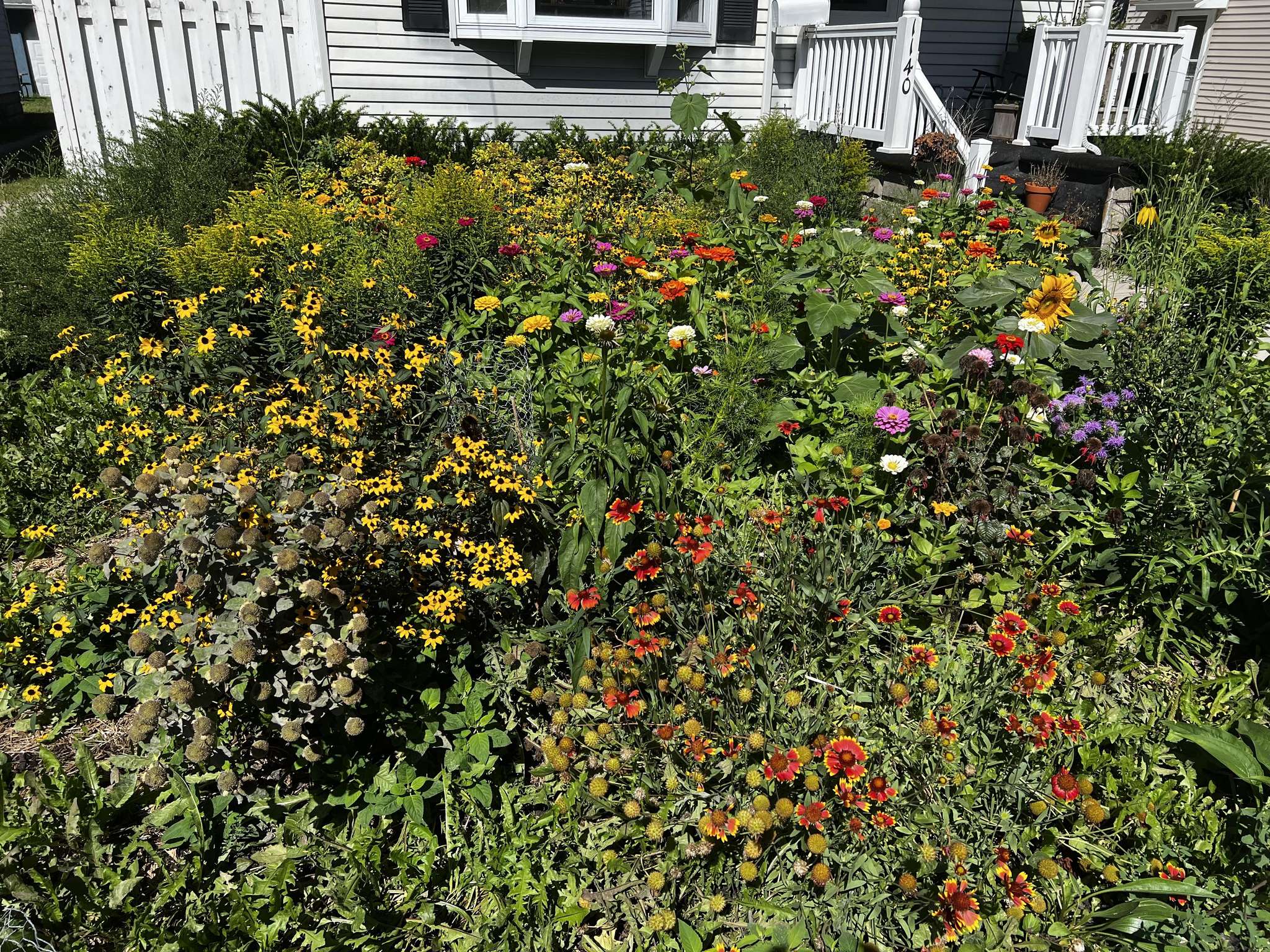
A monoculture of Kentucky bluegrass isn't an ecosystem. It supports almost nothing — no native insects, no pollinators, no food web. My front yard in Green Bay was exactly that: a small rectangle of grass that required mowing and returned nothing.
In 2023, I converted it.
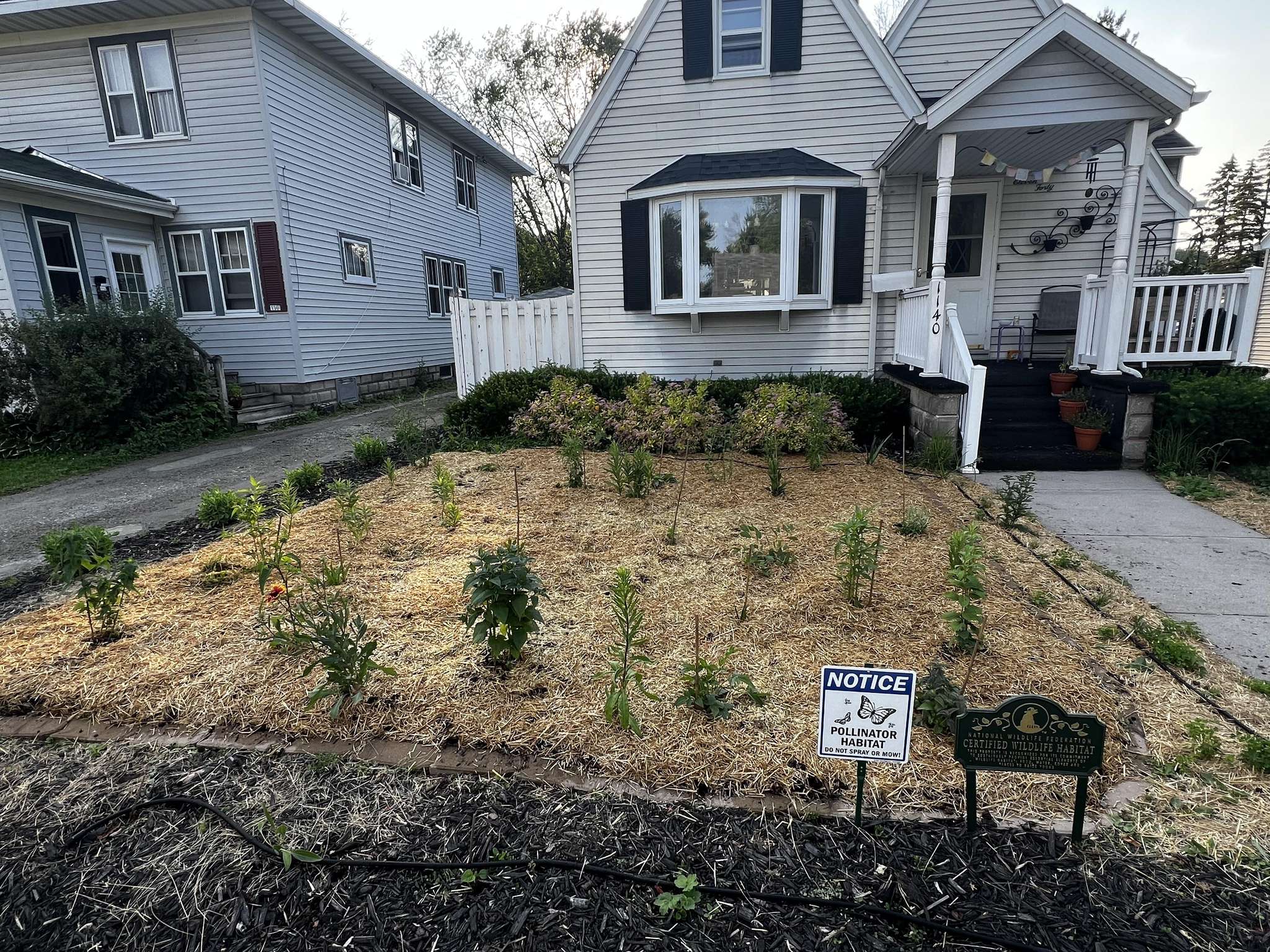
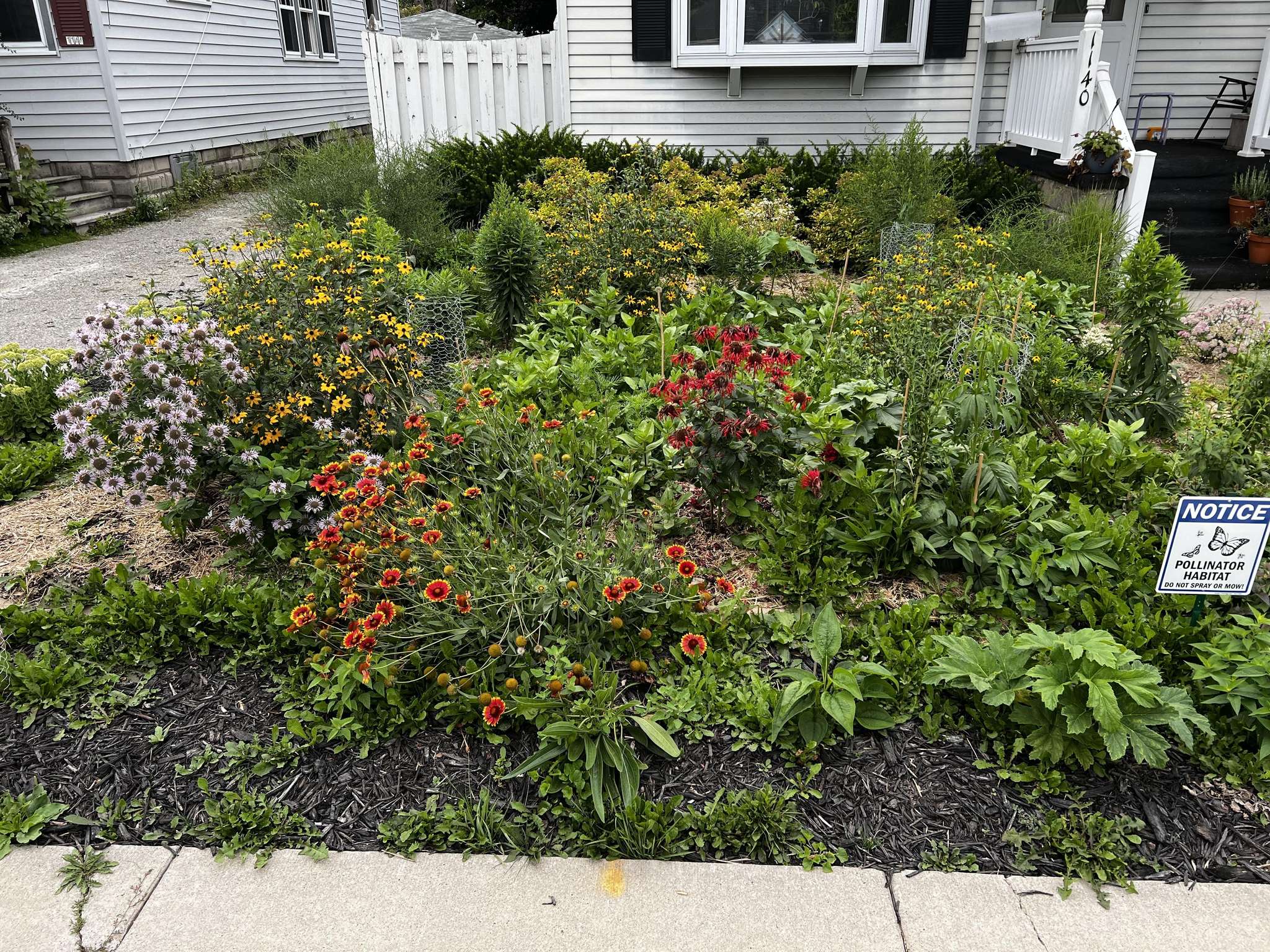
After carving out a mulched setback (required by city ordinance) and a strip of Prairie Dropseed along the entrance walk, the remaining 288 square feet became the pollinator habitat.
City compliance
Green Bay has rules about this. City ordinance governs natural landscaping, and I submitted a formal proposal to comply with the city's Planned Natural Landscapes policy before converting the lawn.
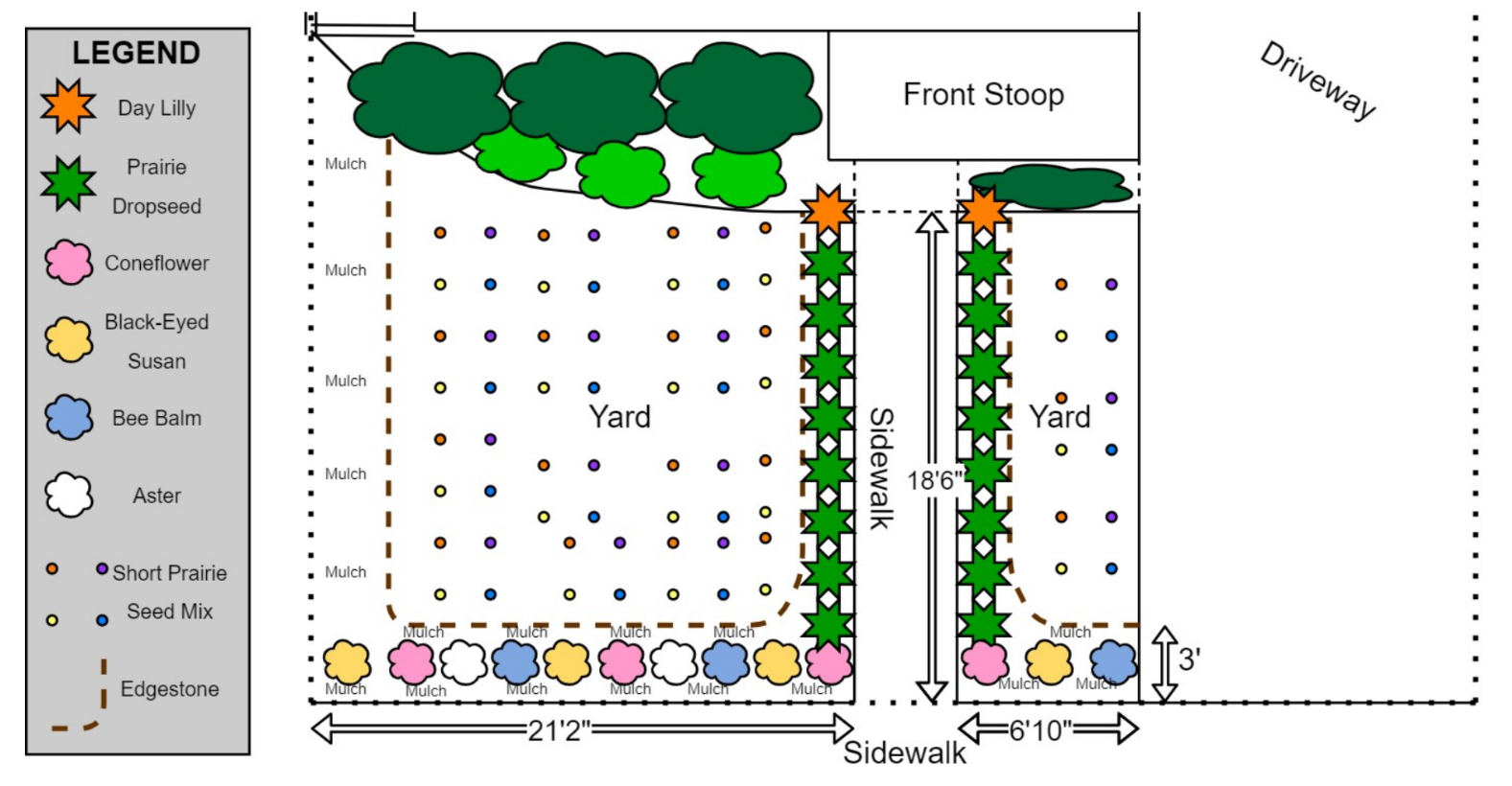
The compliance plan centered on the setback: a 3-foot-deep mulched border running along the front sidewalk and left side of the yard, edged with tan "Edgestone" brick. The ordinance specifies that the setback area should be "regularly cut turf grass, garden beds, trees, shrubs, mulch, wood chips, landscape stone, or other approved material." I planted Coneflower, Black-Eyed Susan, Bee Balm, and Aster within the front setback — a neatly spaced flower bed that satisfies the garden bed provision, inside a mulched border that satisfies the mulch provision. However, I later converted this to mostly Prairie Smoke.
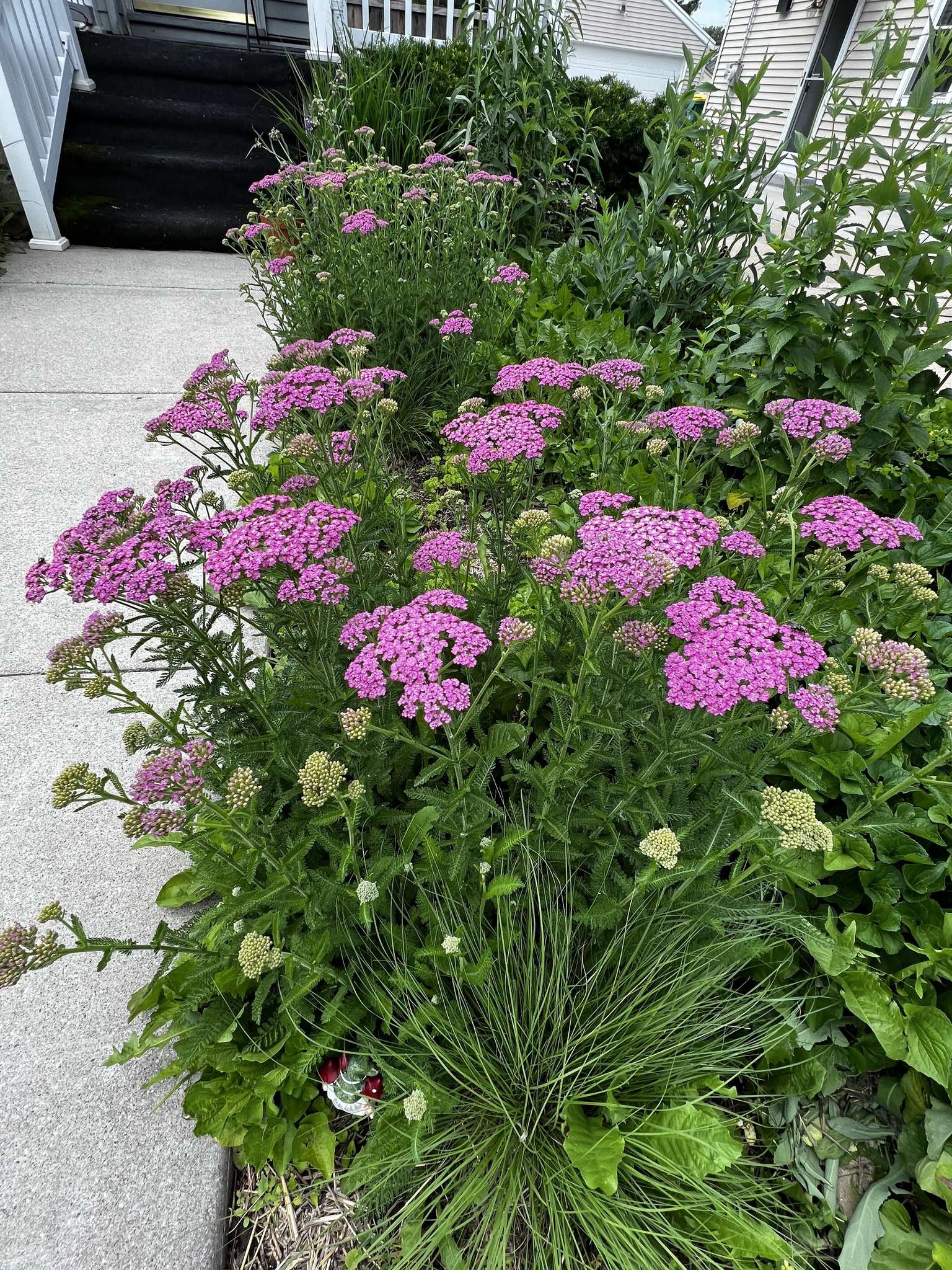
The 74 sq ft entrance walk beds on either side of the front walk were planted with Prairie Dropseed — a native grass intended to fill in completely without mulch. In practice, I have also let clover, wood sorrel, and yarrow grow there as it wants to.
First attempt: seed broadcast
The original plan was to overseed the 288 sq ft habitat area with Prairie Nursery's "Prairie Seed Mix for Medium Soils" — 18 native species including Pale Purple Coneflower, Rattlesnake Master, Prairie Blazing Star, and Golden Alexanders.
It never had a chance. Squirrels and other rodents found it immediately after broadcast and ate essentially all of it. Germination was close to zero.
Course correction: starter plugs
After the seed failure I switched to starter plugs from Stone Silo Prairie Plants, a local native wildflower nursery. Plugs are established young plants, not seeds — they go in the ground with root systems already developed, which makes them far more resistant to predation.
This is when I fell in love with the project. Picking out individual plants — learning their names, bloom times, heights, and relationships with specific pollinators — turned into something I hadn't expected. It reminds me a lot of playing Pokémon: there are dozens of species, each with its own profile, and you're building out your PokeDex catalog. The cataloging instinct kicked in hard, and I started tracking everything.
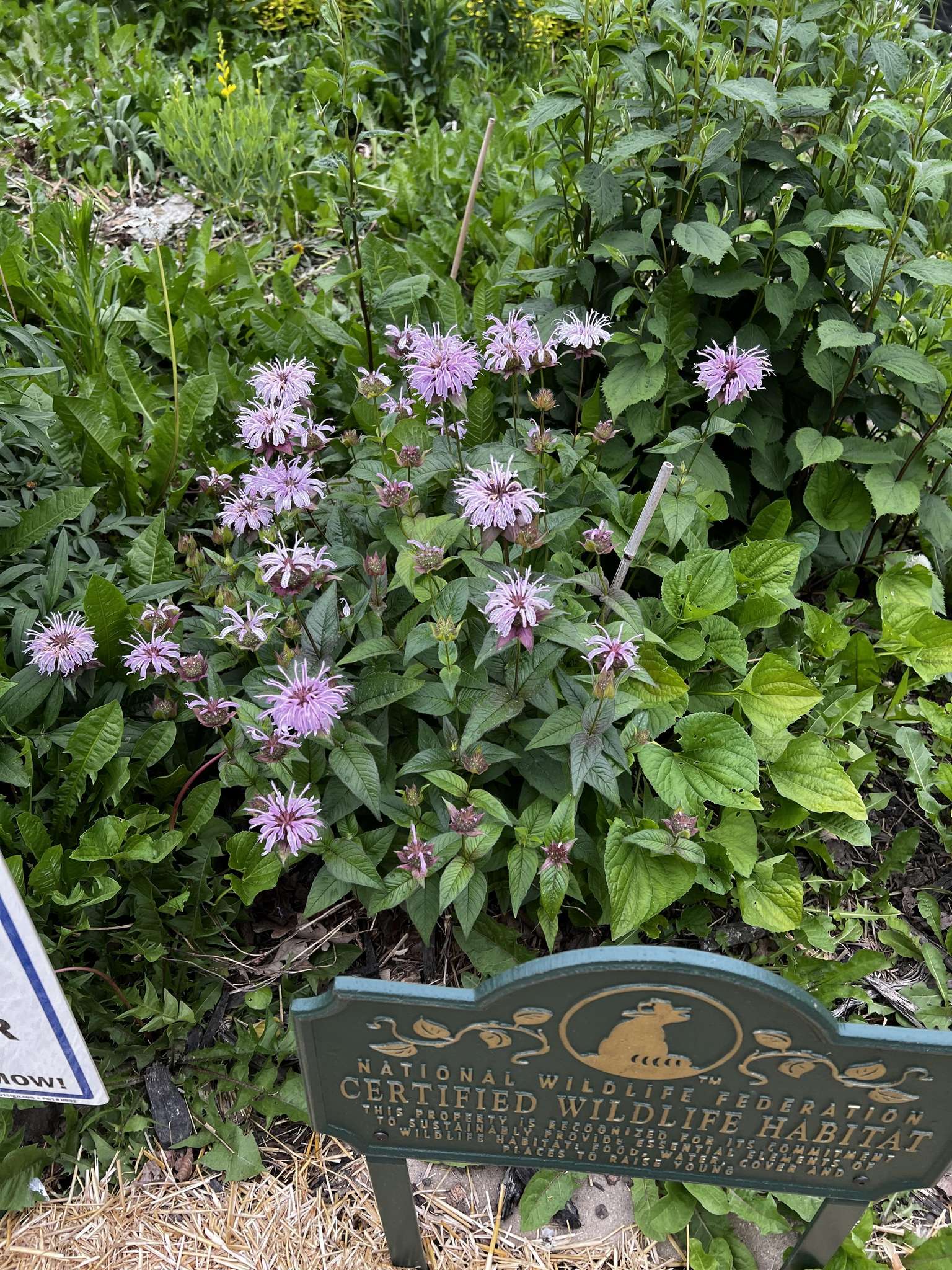
The plant catalog
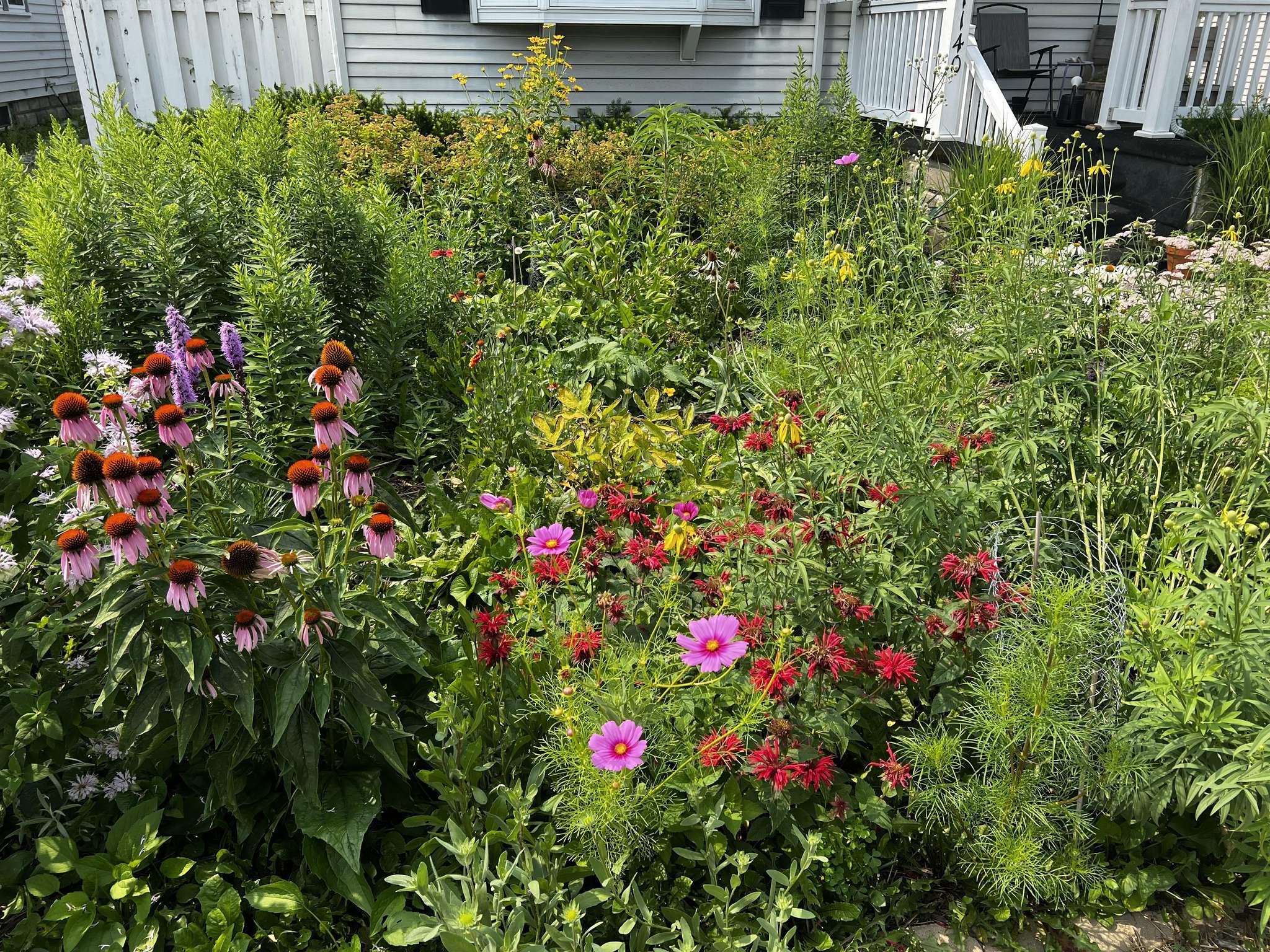
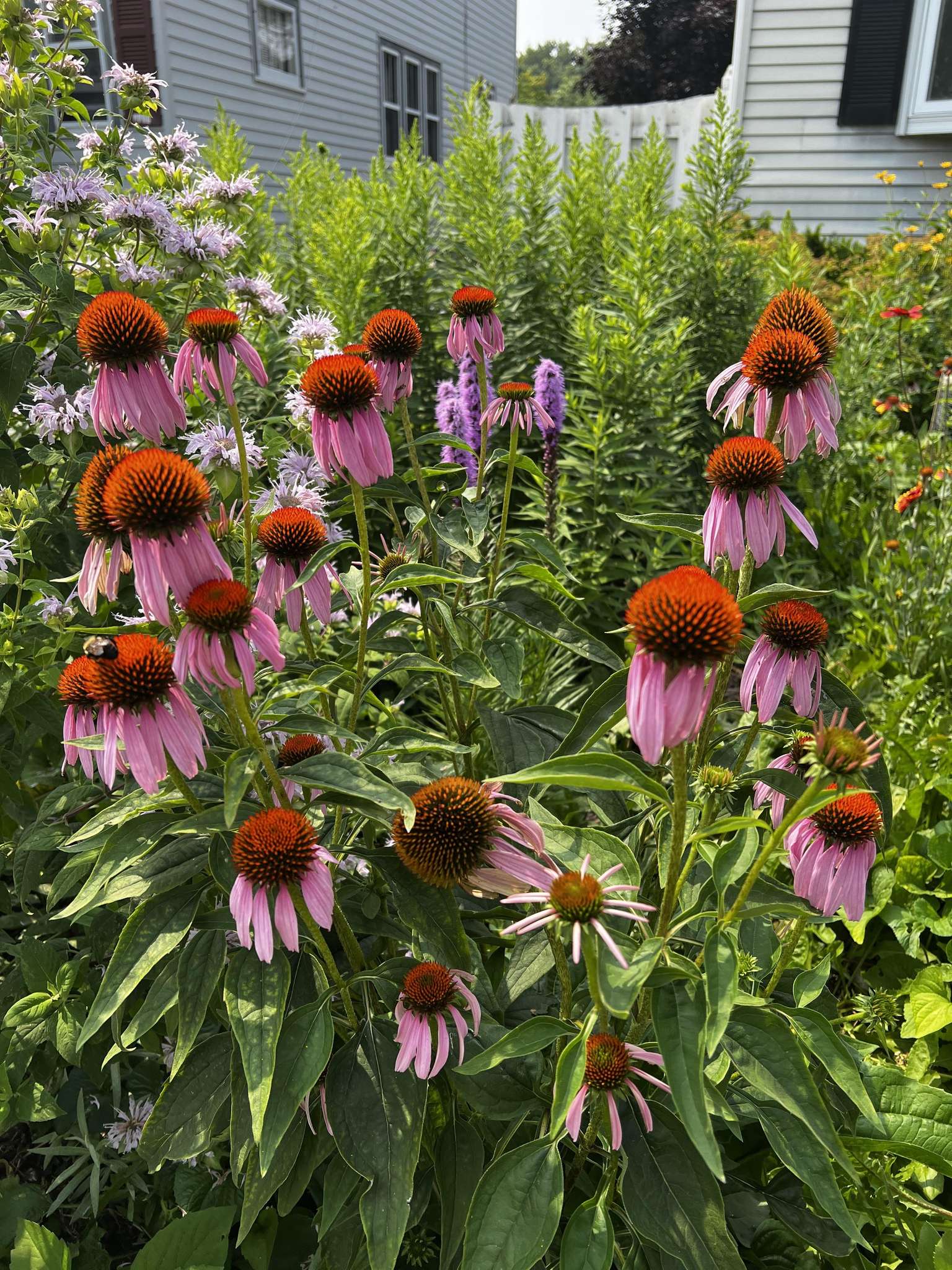
What started as 18 species in a seed packet has grown to 39 identified species (plus one prospective addition), spanning bloom times from late May through October and heights from half a foot to six feet.
| Common Name | Scientific Name | Bloom | Color | Height |
|---|---|---|---|---|
| Common Yarrow | Achillea millefolium | June–Sept | white/pink | 1–3 ft |
| Anise Hyssop | Agastache foeniculum | July–Aug | lavender | 2–4 ft |
| Pearly Everlasting | Anaphalis margaritacea | Mid July–Aug | white | 2–3 ft |
| Swamp Milkweed | Asclepias incarnata | — | fuchsia | 3–5 ft |
| Large Yellow Indigo | Baptisia sphaerocarpa | — | yellow | 3–4 ft |
| Pale Purple Coneflower | Echinacea pallida | Late July–Aug | pale purple | 2–3 ft |
| Purple Coneflower | Echinacea purpurea | Late June–Sept | fuchsia | 2–4 ft |
| Annual Fleabane | Erigeron annuus | July–Aug | white | 2–5 ft |
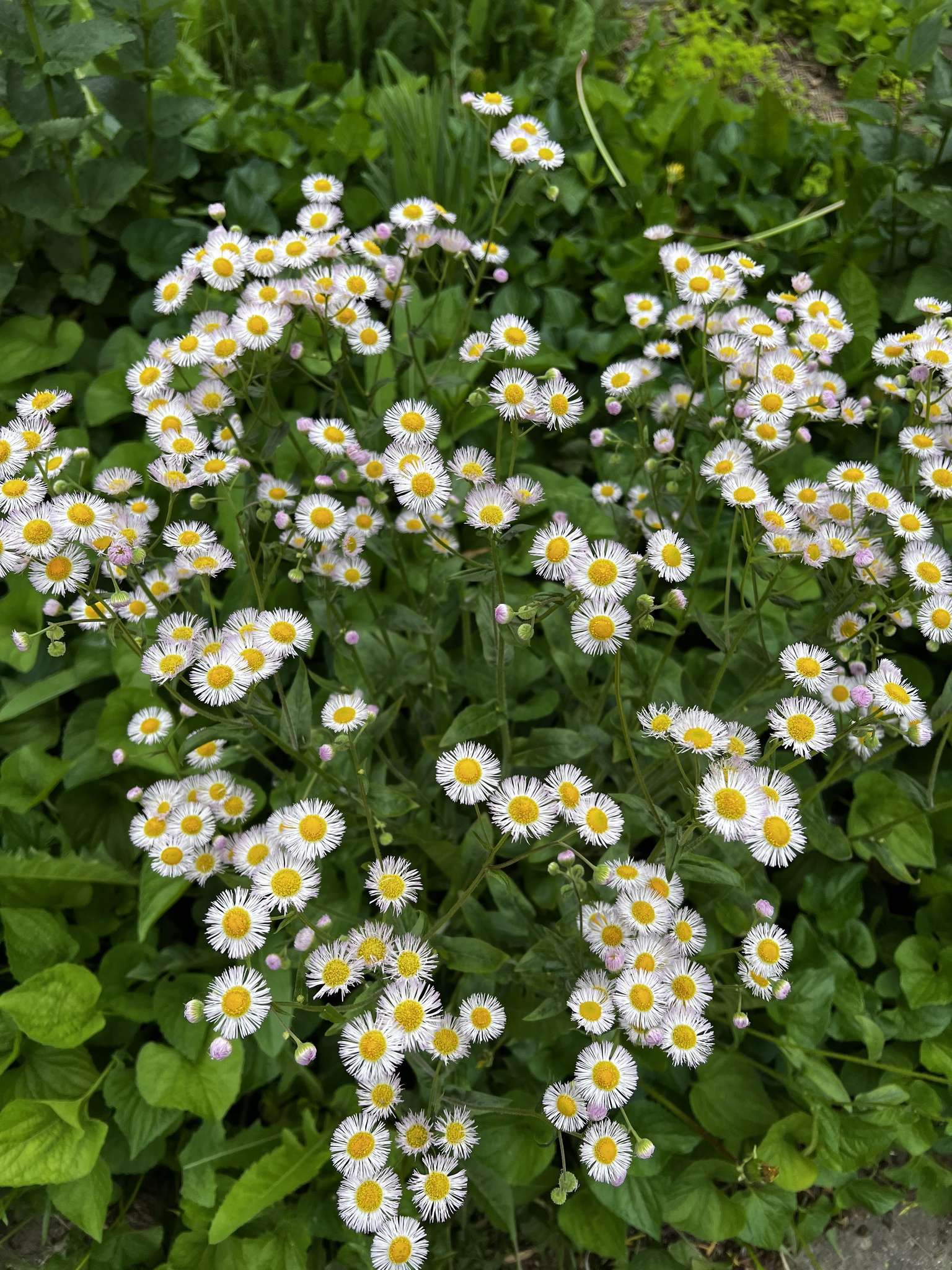
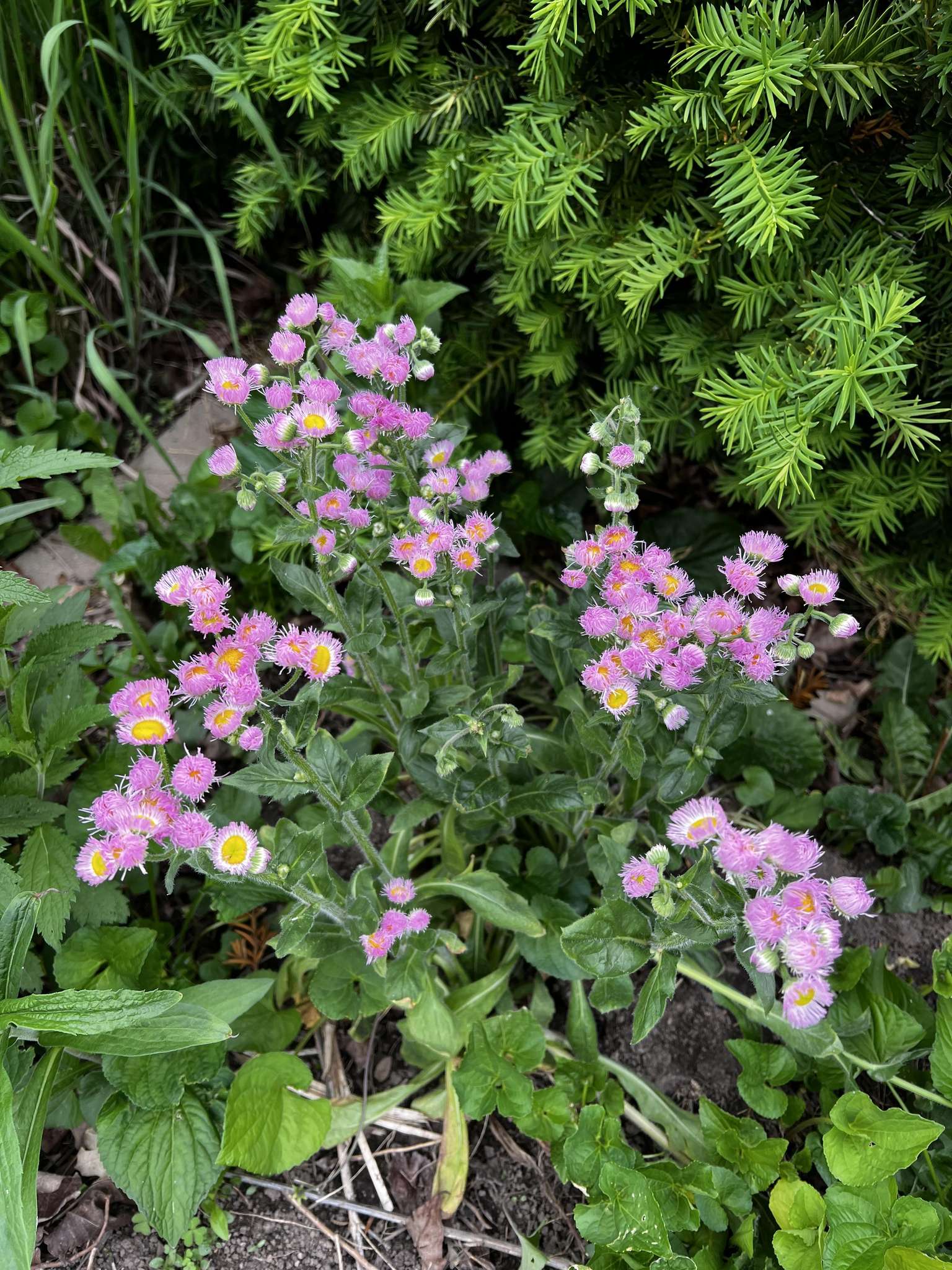
| Philadelphia Fleabane | Erigeron philadelphicus | Late May | white/pink | 1–3 ft |
| Rattlesnake Master | Eryngium yuccifolium | Late July | white | 3–5 ft |
| Blanket Flower | Gaillardia | July–Sept | yellow/red | 1–3 ft |
| Prairie Smoke | Geum triflorum | Late May | red/pink | 0.5–1.5 ft |
| False Sunflower | Heliopsis helianthoides | June–Aug | yellow | 3–6 ft |
| Virginia Waterleaf | Hydrophyllum virginianum | — | white/pale pink | 1–2 ft |
| Rough Blazing Star | Liatris aspera | — | purple | 2–5 ft |
| Northern Blazing Star | Liatris ligulistylis | Early July–Aug | purple | 2–5 ft |
| Prairie Blazing Star | Liatris pycnostachya | July | purple | 2–5 ft |
| Fringed Loosestrife | Lysimachia ciliata | Late May | yellow | 1–4 ft |
| Bradbury's Bee Balm | Monarda bradburiana | June–early July | white/pale pink | 2 ft |
| Red Bee Balm | Monarda didyma | Late June–Aug | red | 2–4 ft |
| Wild Bergamot | Monarda fistulosa | July–Aug | lavender | 2–4 ft |
| Foxglove Beardtongue | Penstemon digitalis | Early July | white | 3–5 ft |
| Yellow Coneflower | Ratibida pinnata | Late July–Sept | yellow | 3–5 ft |
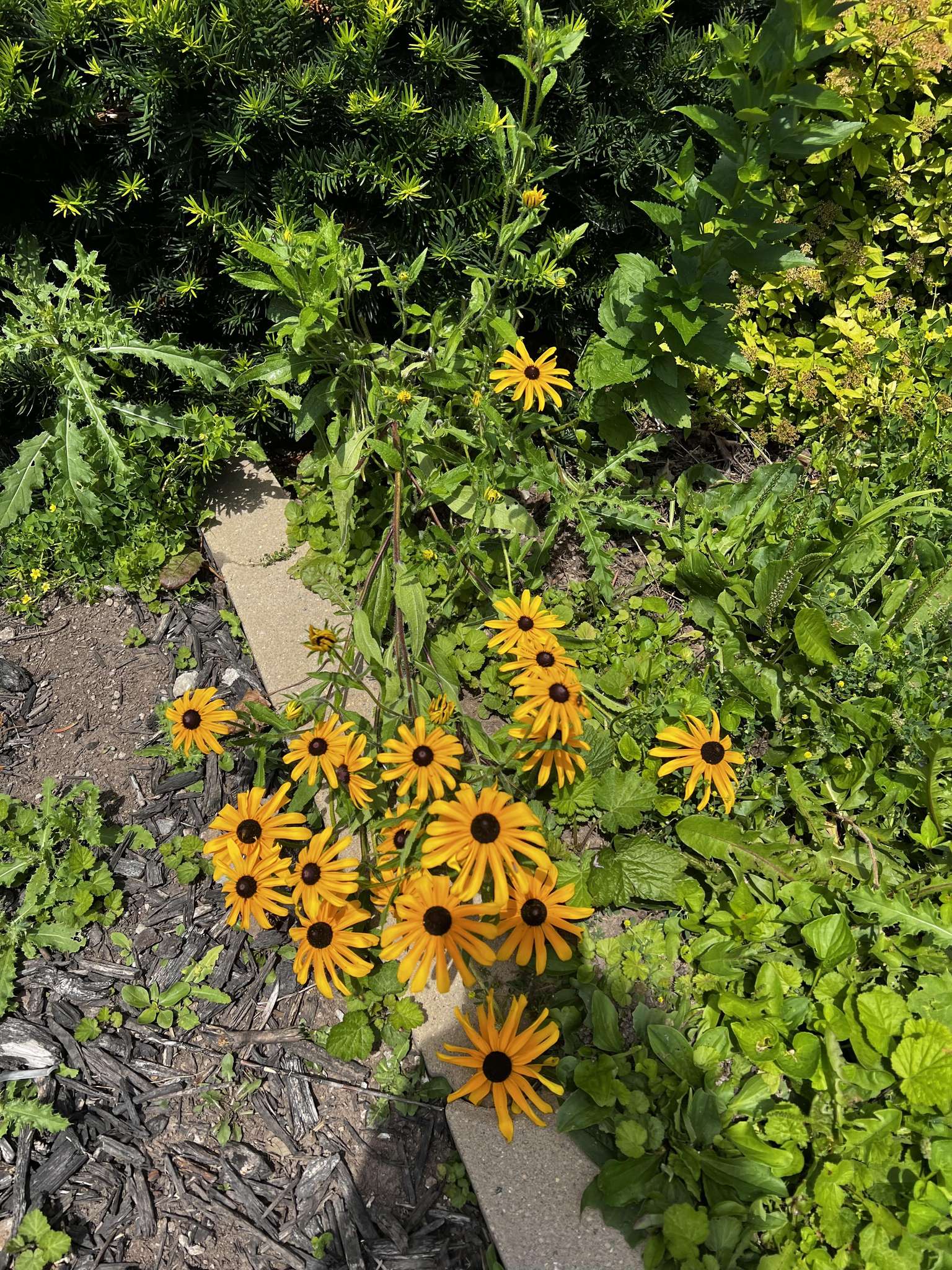
| Black-Eyed Susan | Rudbeckia hirta | Late July | yellow | 2–3 ft |
| Brown-Eyed Susan | Rudbeckia triloba | July–Aug | yellow | 2–3 ft |
| Zigzag Goldenrod | Solidago flexicaulis | September | yellow | 1–3 ft |
| Giant Goldenrod | Solidago gigantea | August | yellow | 4–6 ft |
| Prairie Dropseed | Sporobolus heterolepis | n/a (grass) | — | 2 ft |
| Wood Poppy | Stylophorum diphyllum | Late May | yellow | 1–1.5 ft |
| Smooth Blue Aster | Symphyotrichum laeve | — | pale bluish purple | 2–4 ft |
| Aromatic Aster | Symphyotrichum oblongifolium | — | pale bluish purple | 1–3 ft |
| Frost Aster | Symphyotrichum pilosum | Mid Aug–Sept | white | 2–4 ft |
| Ohio Spiderwort | Tradescantia ohiensis | Late May–Late July | purple | 2–3 ft |
| Blue Vervain | Verbena hastata | July–early Aug | purple | 2–5 ft |
| Golden Alexander | Zizia aurea | June | yellow | 1–3 ft |
| Maximilian Sunflower | — | August | — | — |
| Wild Petunia | — | — | — | — |
| Common Milkweed | — | — | — | — |
| Wild Violets | — | Late May–mid June | purple | ≤0.5 ft |
Prospective addition: Golden Groundsel
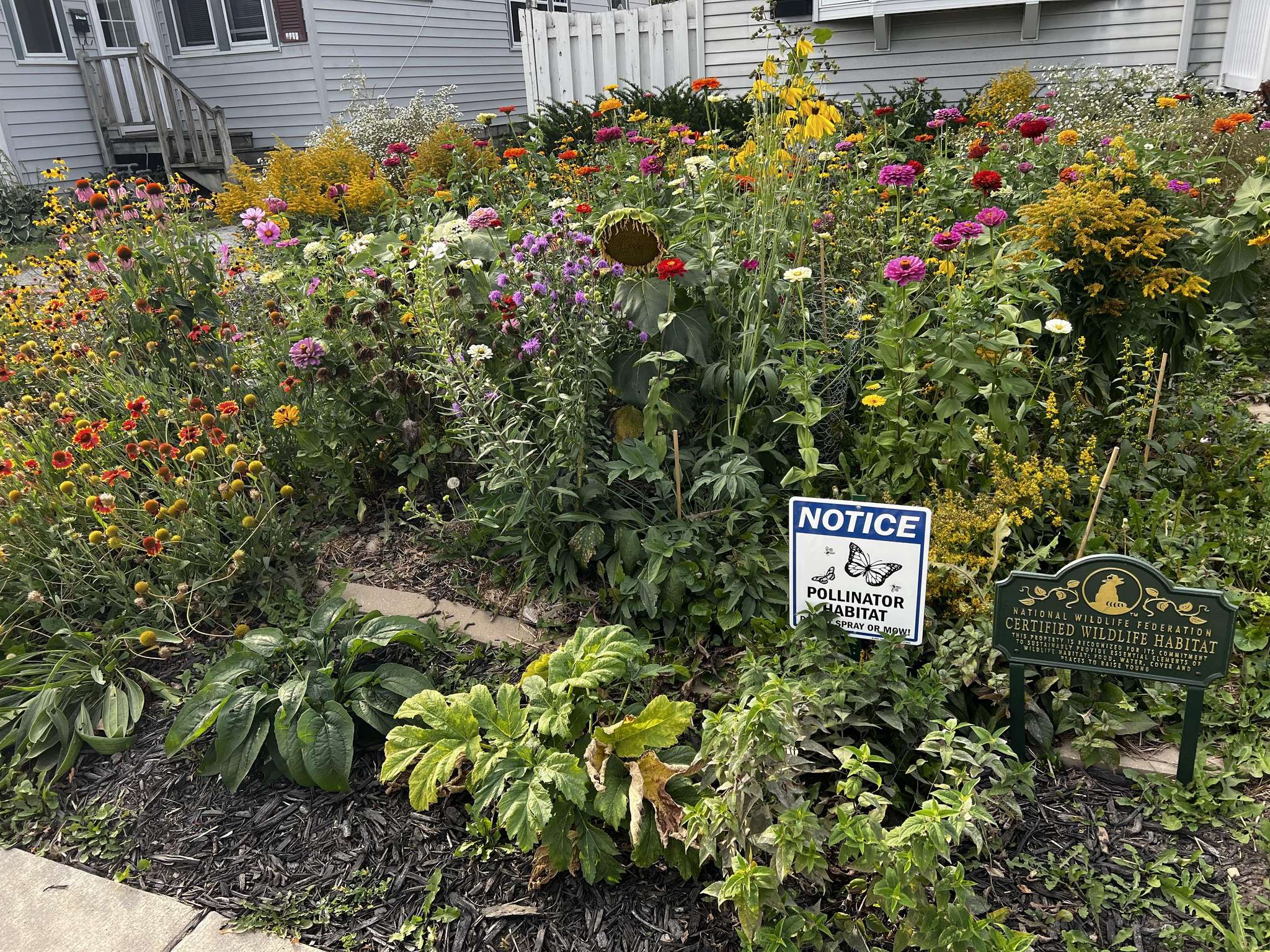
The goal was continuous bloom from May through October — something always flowering across that window, which means continuous forage for pollinators. With 39 species spread across early, mid, and late bloomers, that coverage is largely achieved.
Neighbor reactions
Replacing a tidy front lawn with what looks — at least early in the season — like a patch of weeds is a statement whether you intend it to be or not. To neighbors who take pride in a well-edged, immaculately mowed lawn, a front yard full of tall native plants growing in apparent chaos is an affront. You get looks. You get questions. A few of those questions have a certain edge to them.
This is exactly why I went through the formal ordinance compliance process before a single plant went in. I wanted this radical, solarpunk-adjacent yard to be unimpeachably inside the lines — documented, permitted, proper. The city had a process, I followed it, and I have the paperwork to prove it.
I also took steps to make the intent legible to anyone walking by. The yard is certified through the National Wildlife Federation's Certified Wildlife Habitat program — it meets the requirements for food, water, cover, and places to raise young. The certification sign is posted in the yard. I added a couple more signs alongside it, because if the goal is to communicate there is a method to this madness, more is more.
That said — the reception has been overwhelmingly positive. When I'm out there weeding or planting, neighbors stop and start talking. Almost everyone who takes the time to ask about it loves it. The people who are drawn to engage are curious, not hostile. They want to know what the plants are, whether it's a lot of work (it is), whether they could do something similar (the can!). The yard turns out to be a conversation starter in the best possible way.
What it actually does
A yard this small isn't going to save the monarch butterfly by itself. But it's part of a network. Native plants support native insects, which support birds, which support higher-order predators. A monoculture lawn supports none of that chain. Even 288 square feet in the middle of a residential neighborhood is a node.
The cataloging instinct — wanting to know every species, track every bloom, notice what's thriving and what's struggling — is the same systems thinking that shows up in my software work. There are inputs, outputs, feedback loops, and emergent behavior. The habitat doesn't stay static; it changes every season as species establish, spread, or give way to their neighbors. That's the interesting part.